Syka
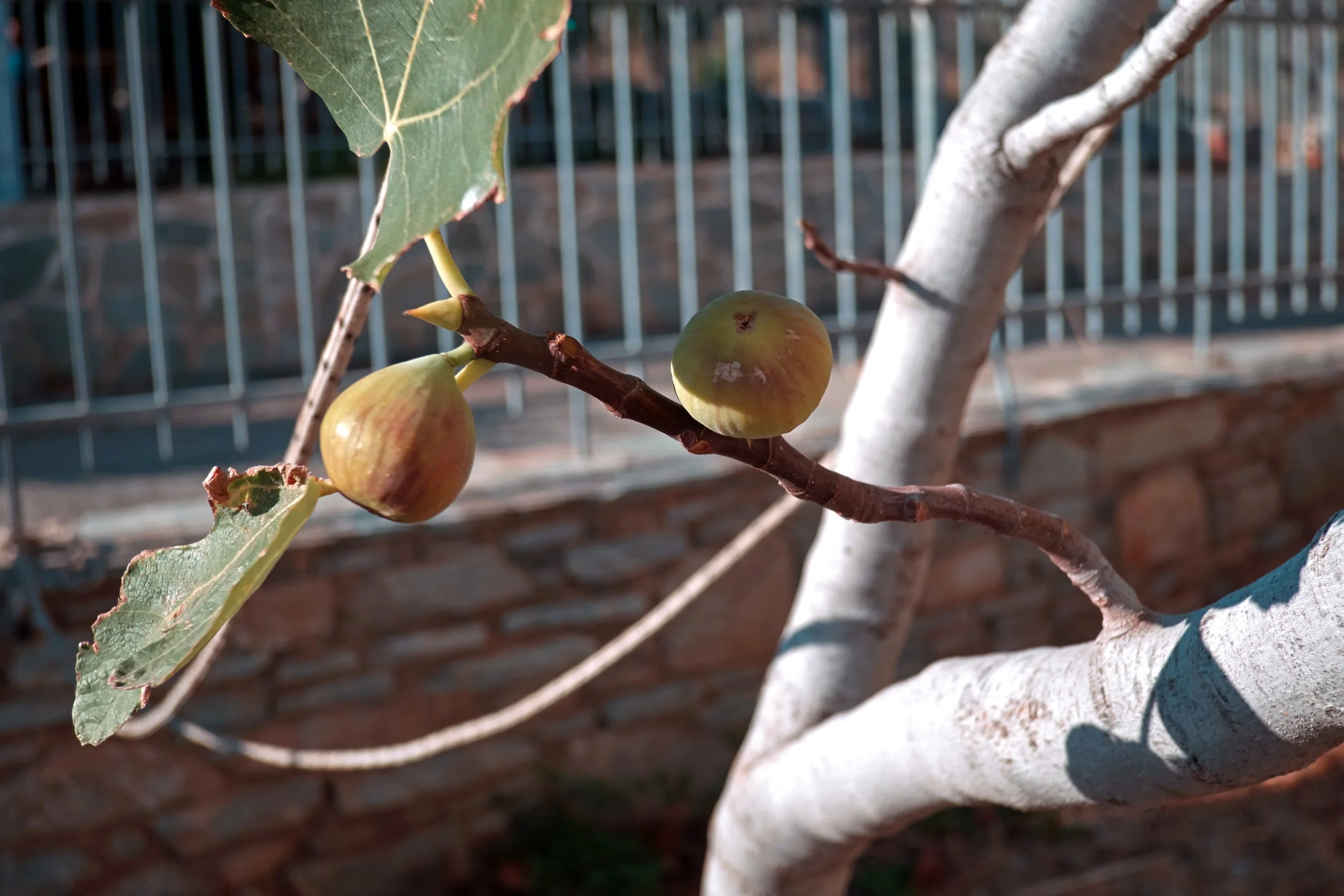
Last summer I was lucky enough to spend a couple of unhurried weeks in Agios Dimitrios, on the Greek island of Evia. We stayed by the sea as guests of our friend’s family—Giorgos, Konstantina, Kristos, Kristos (Papous), and Vasso (Yiayia).
It was a two weeks shaped by light and heat. Much of the time was spent sitting beneath a large mulberry tree, watching the light shift, the heat rise and fall, and the sea change colour through the day.
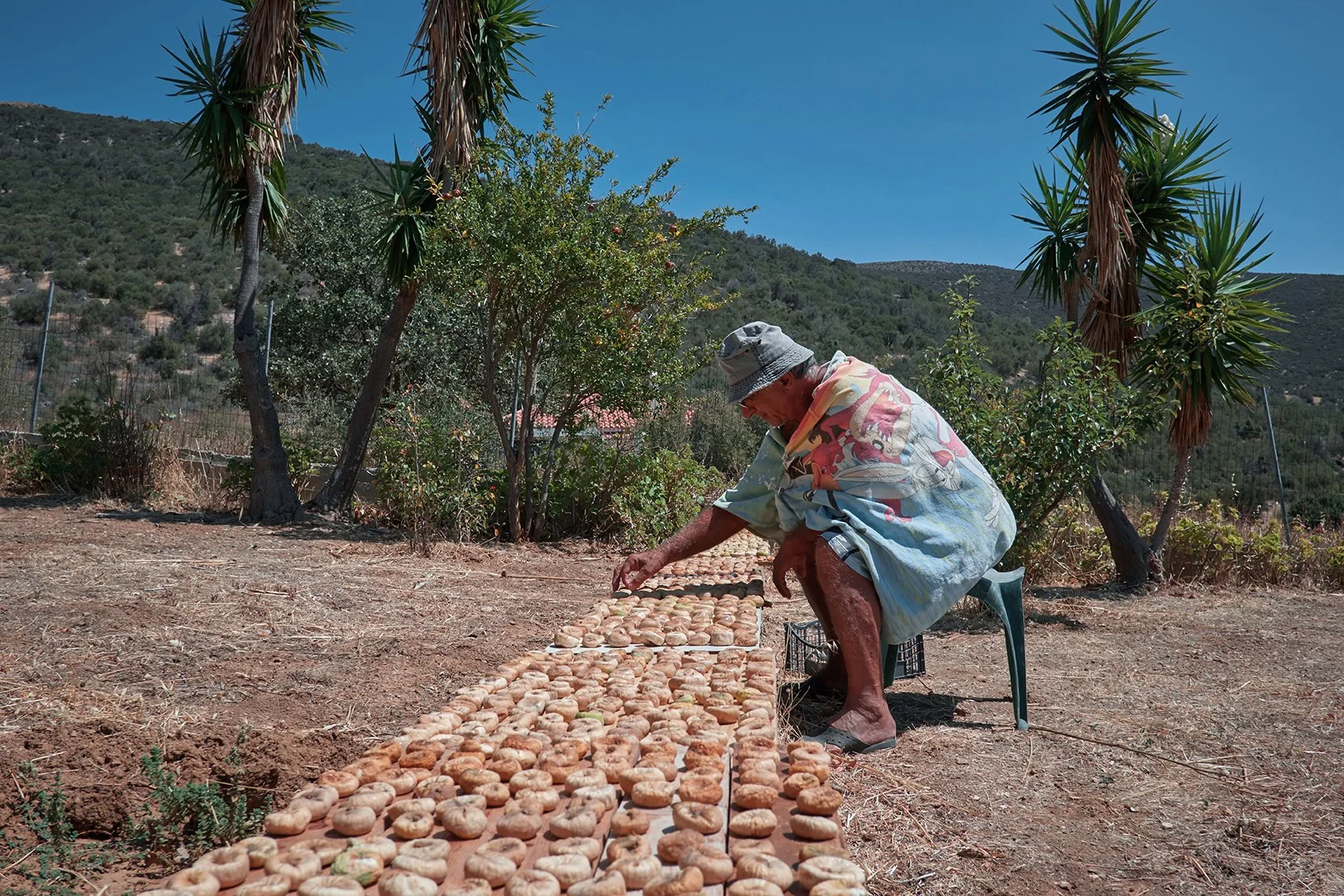
While we were there, Kristos and Vasso were undertaking one of their annual activities—gathering, drying, and storing figs. Syka in Greek (σύκα).
Like most parts of Greece, fig trees grow everywhere in the local area, and by this time of year their branches are heavy with fruit.
Every year, Kristos and Vasso pick figs from the local trees, dry them, and store them for later in the year. We were there at just the right time to watch this unfold, beginning with laying the figs out in the sun and turning them again and again so they dry evenly.
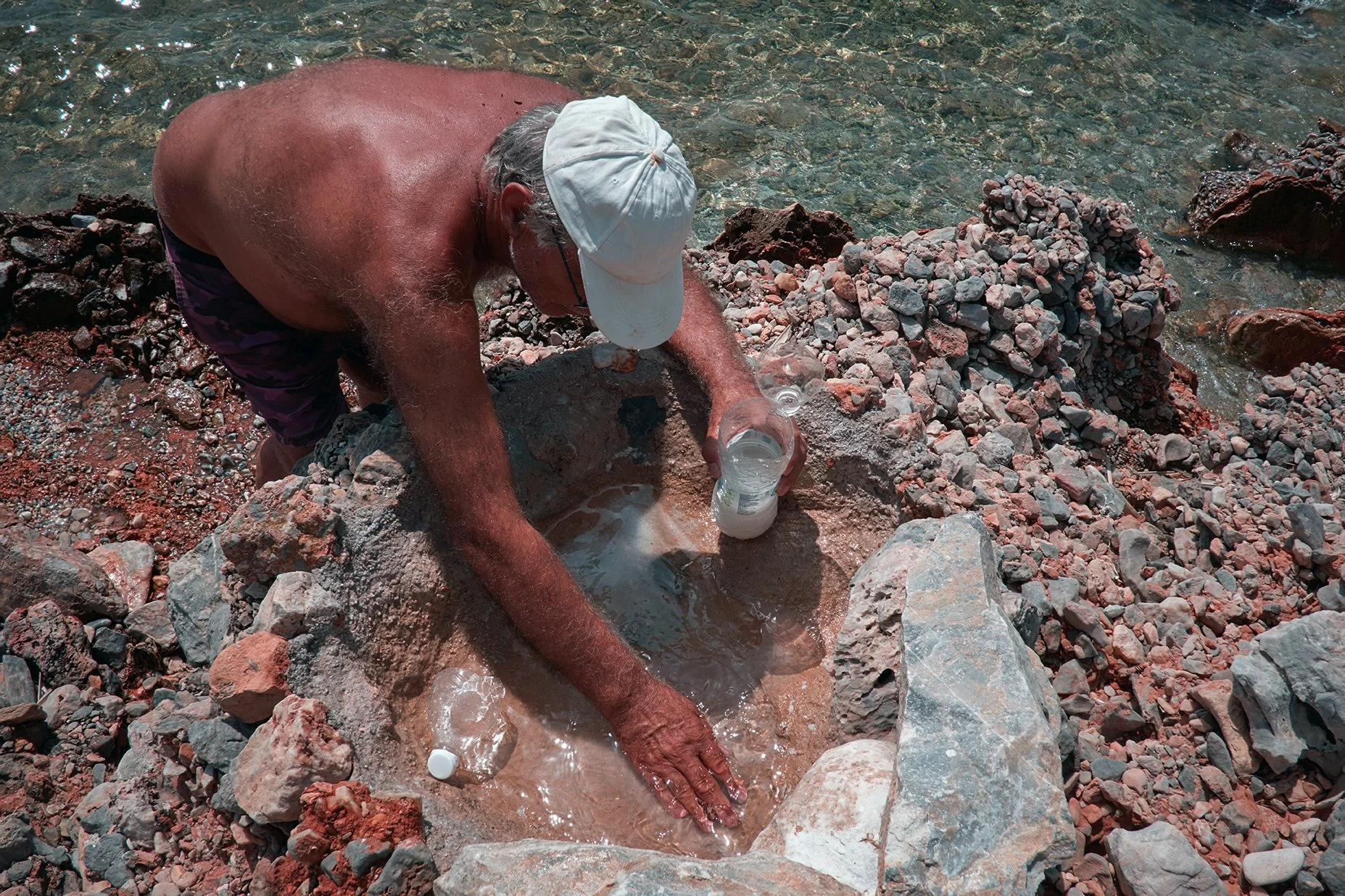
A few days later, the figs had dried in the hot Greek sun. A simple mixture of herbs and salt was made to clean and preserve them, the salt collected by Kristos from a small pool he had constructed by the sea.
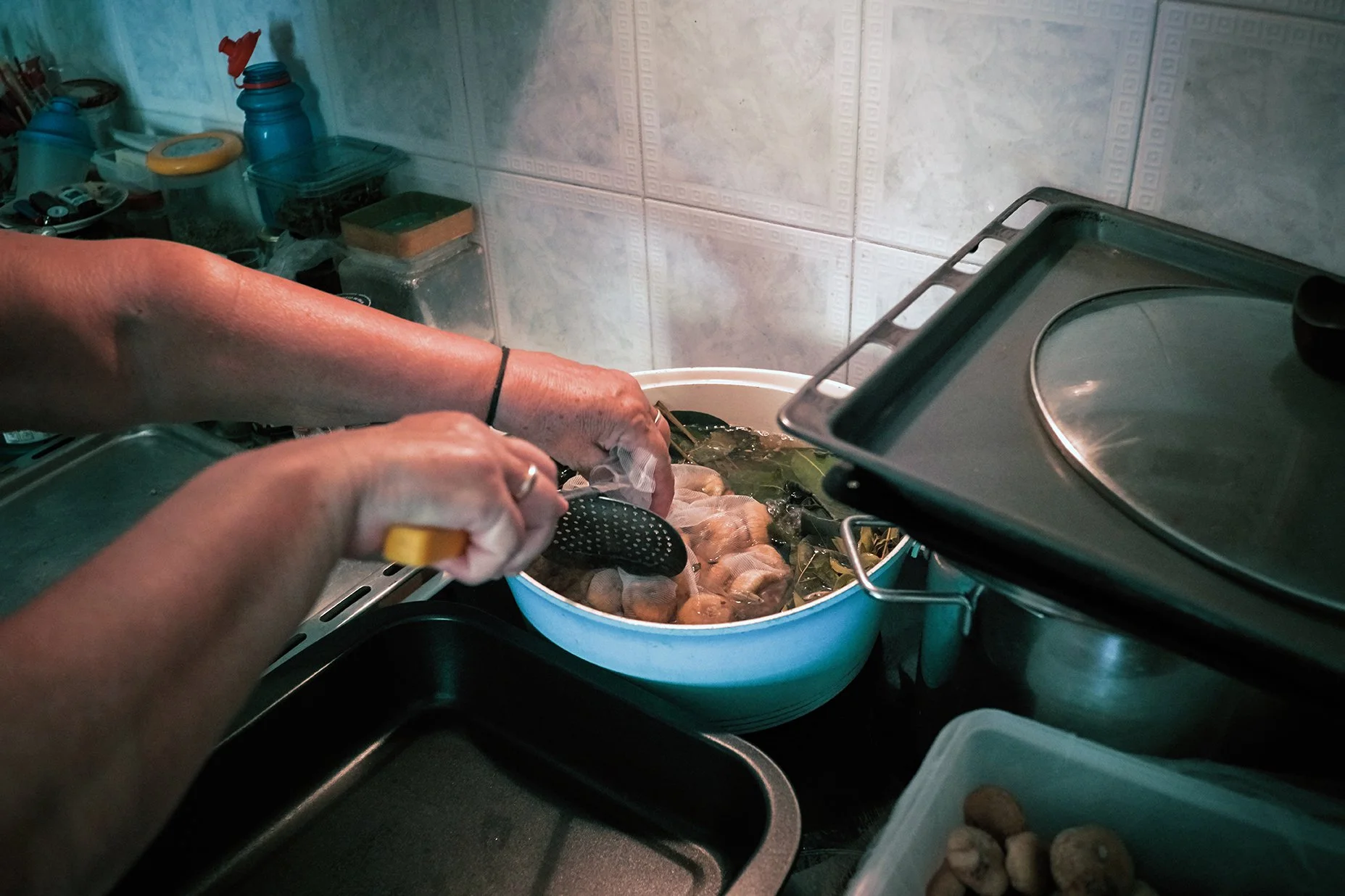
Next, the figs were left to dry again, this time indoors, before being carefully stacked into small boxes or cut and stored in glass jars, ready for the months ahead.
At first, I couldn’t help thinking how much effort it all seemed. After all, dried figs are easily bought in local shops or markets. But watching the process day after day, that thought quietly fell away.
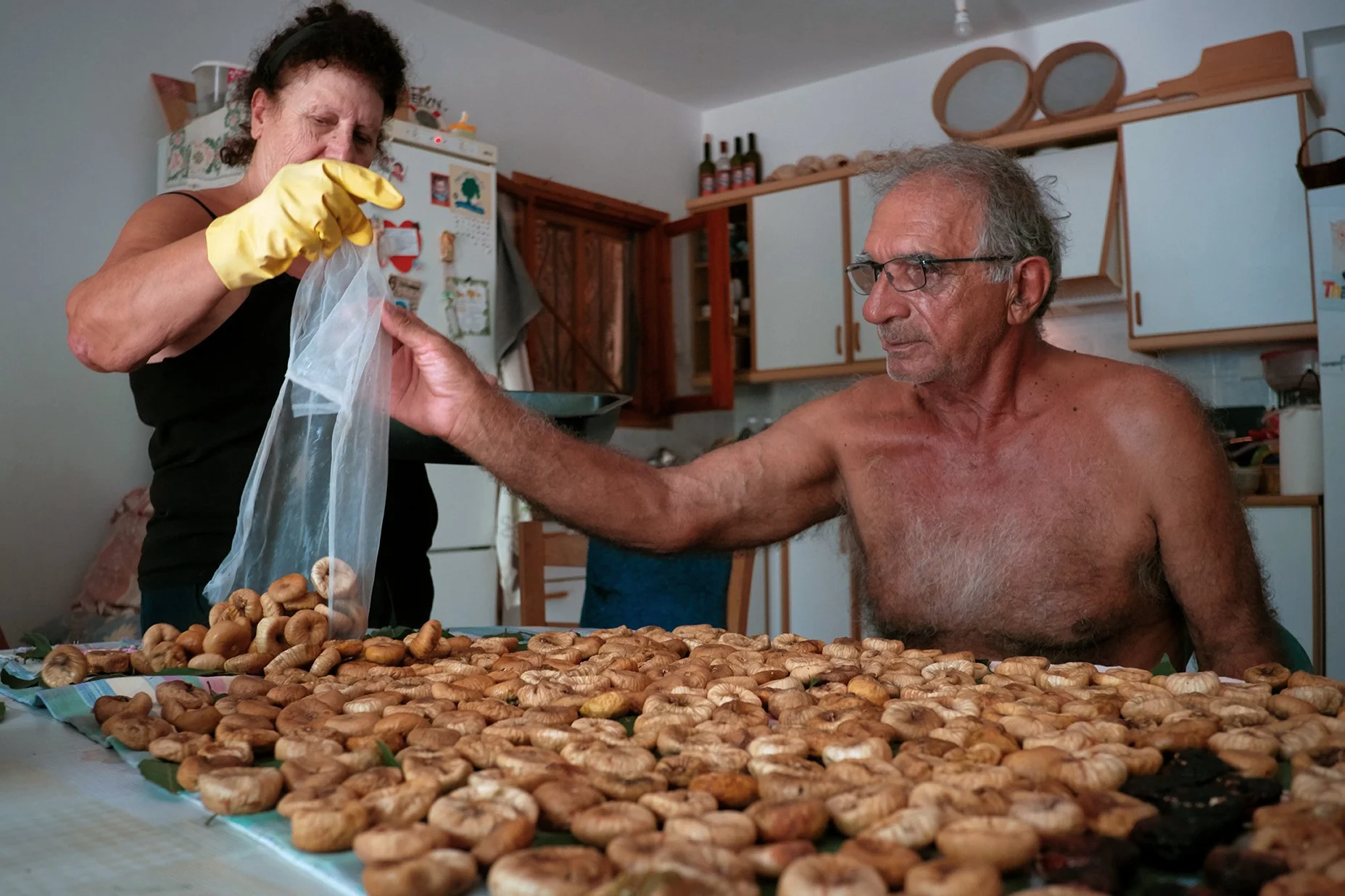
We live in the UK, in a large city. Our days are shaped by familiar routines—work, school, commitments, and movement. Against that backdrop, it’s easy to describe activities like this—practiced over generations—as slow.
But watching Kristos and Vasso, it didn’t feel slow at all. It felt measured. Each stage followed the last without urgency, unfolding at the pace it needed to. Only when set against the speed of modern life does it appear otherwise.
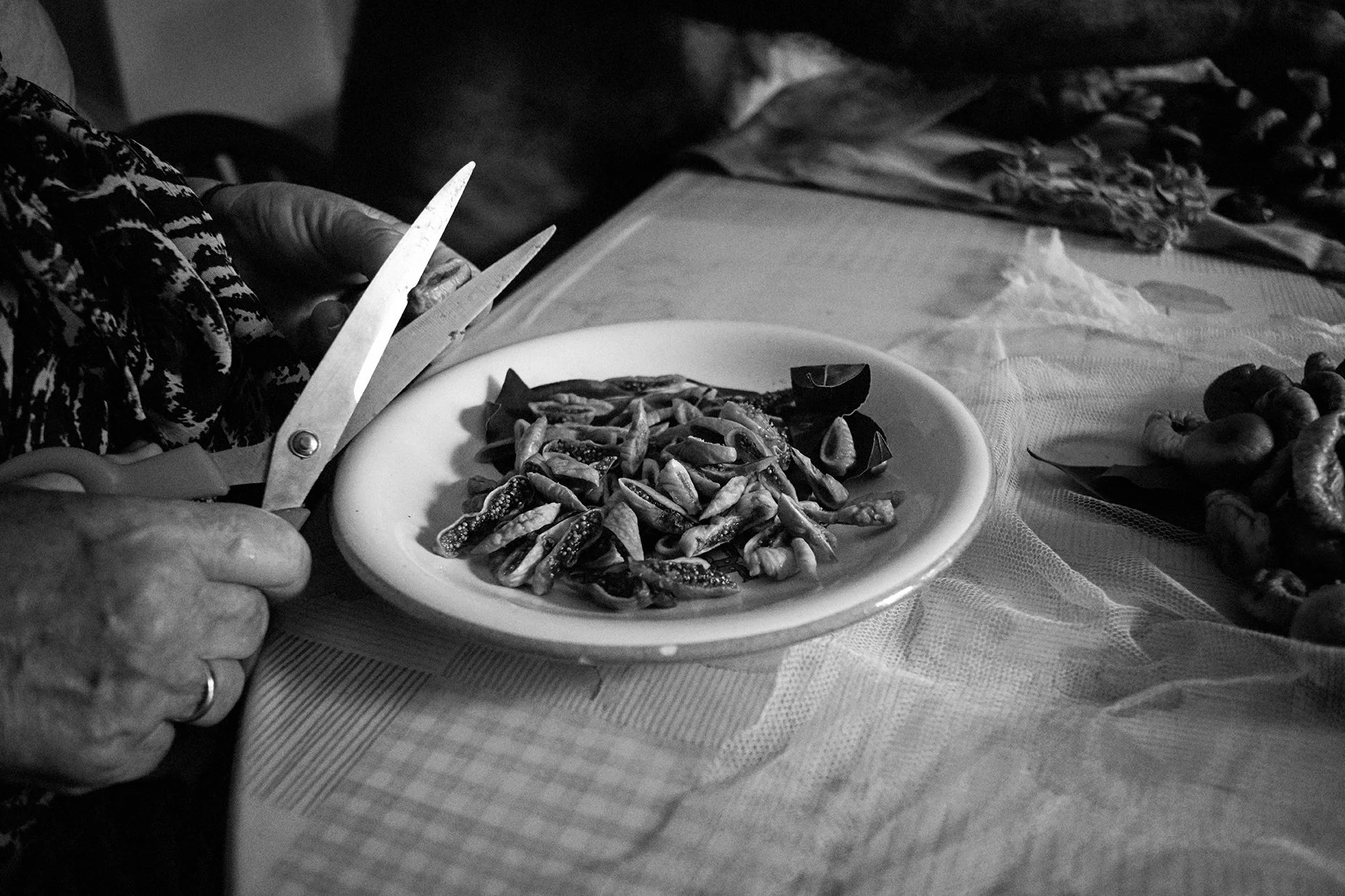
Spending time alongside this work made the contrast clearer. How full our days have become with distraction. How much they are shaped by convenience and the expectation of instant results. The scrolling, the noise, and the small, trivial urgencies that crowd the day are just part of that wider condition.
Time, experienced this way, has space. Space to notice what’s usually passed over, to see, to listen, and to stay with things rather than move on quickly from them.
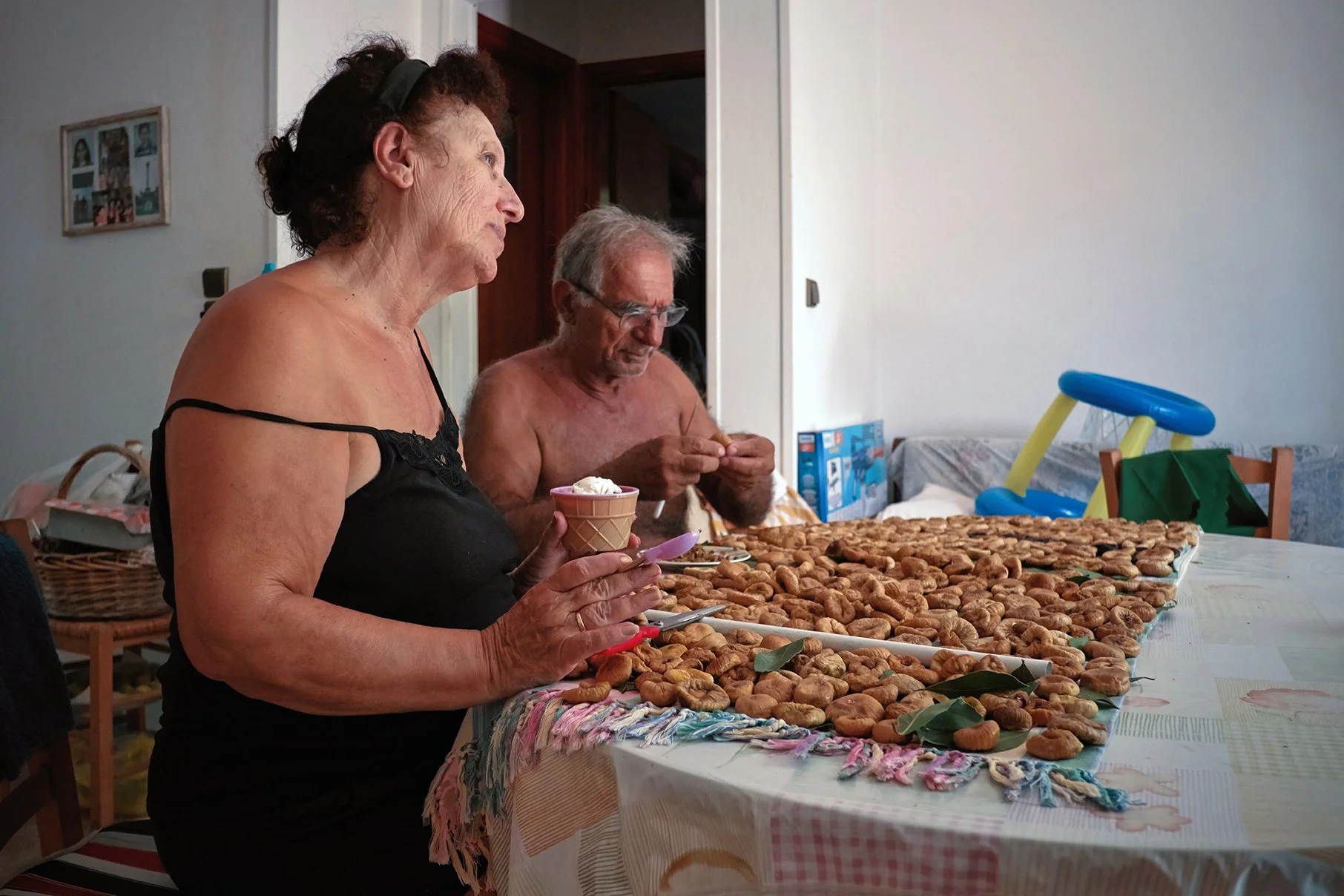
Watching Kristos and Vasso, it becomes clear that this attention isn’t really about figs at all. It’s about continuity. About care. About staying aligned with cycles that have shaped this place for generations…the trees, the sea, and the seasons. A reminder that we aren’t separate from the natural world, but part of it, in exactly the same way as the fig itself.
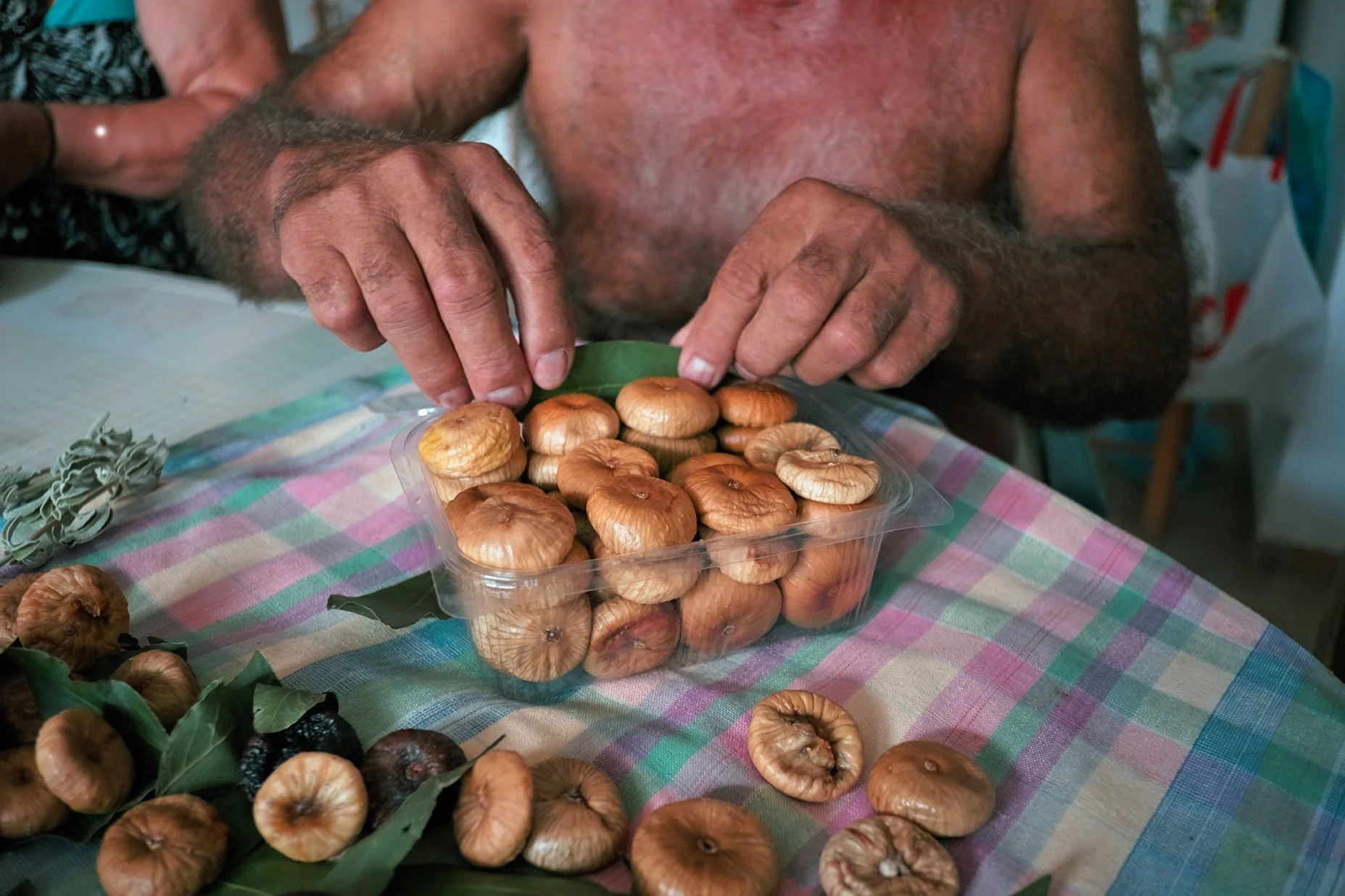
Kristos and Vasso spent several days on this activity, and in doing so remained aligned with cycles of generations before them, the trees, the sea and the seasons. A reminder that we aren’t separate from the natural world, but part of it… in exactly the same way as the fig itself.
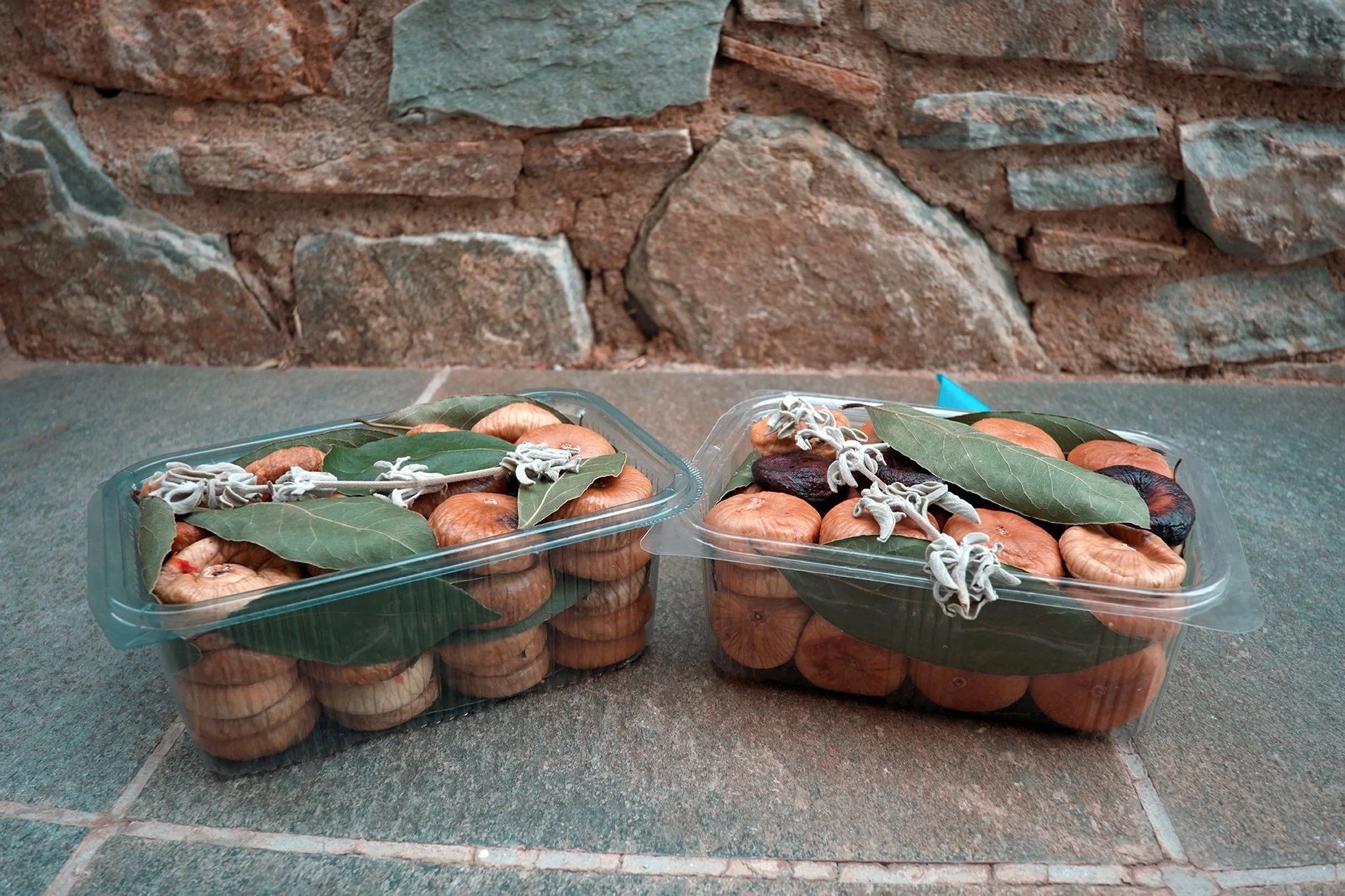
The only cost to them.
Was time.