Doors, Windows & Shops
I’ve photographed doors, windows and shopfronts (not always strictly shopfronts) for many years. Often without really thinking about why. They keep appearing in my work, quietly and consistently, across different places and years.
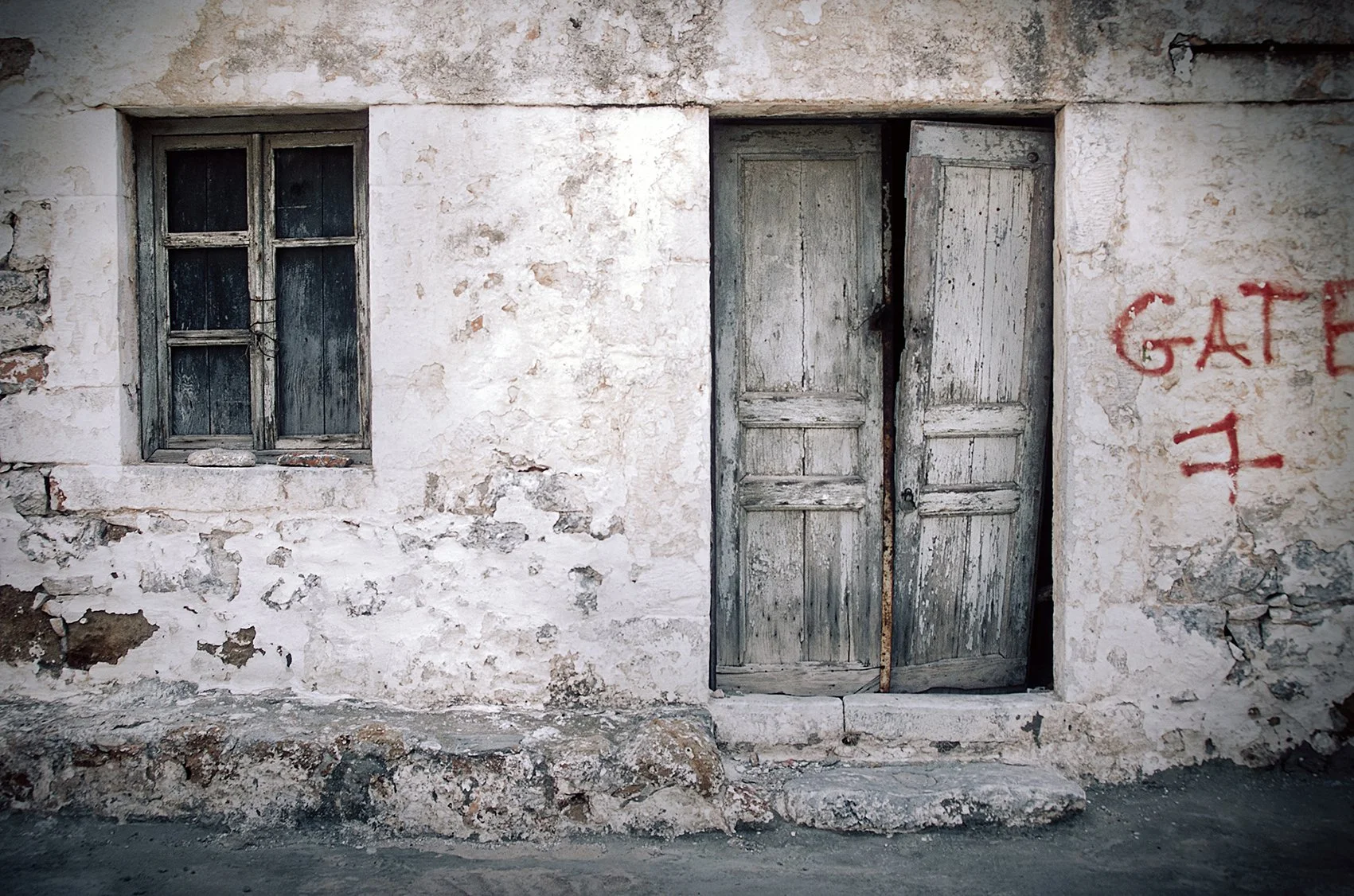
It’s tempting to talk about mystery, about what lies behind a closed door or a half-open window. But I don’t think that’s what draws me to them. I’m not especially interested in imagining lives beyond the frame. What holds my attention is what’s already there.
The geometry comes first. Rectangles within rectangles. Repetition. Symmetry that’s never quite perfect. Balconies stacked one above another, shutters aligned but slightly off, railings cutting across façades in predictable rhythms. There’s a calmness in these imperfect structures, a sense of things being held in place, but only just.
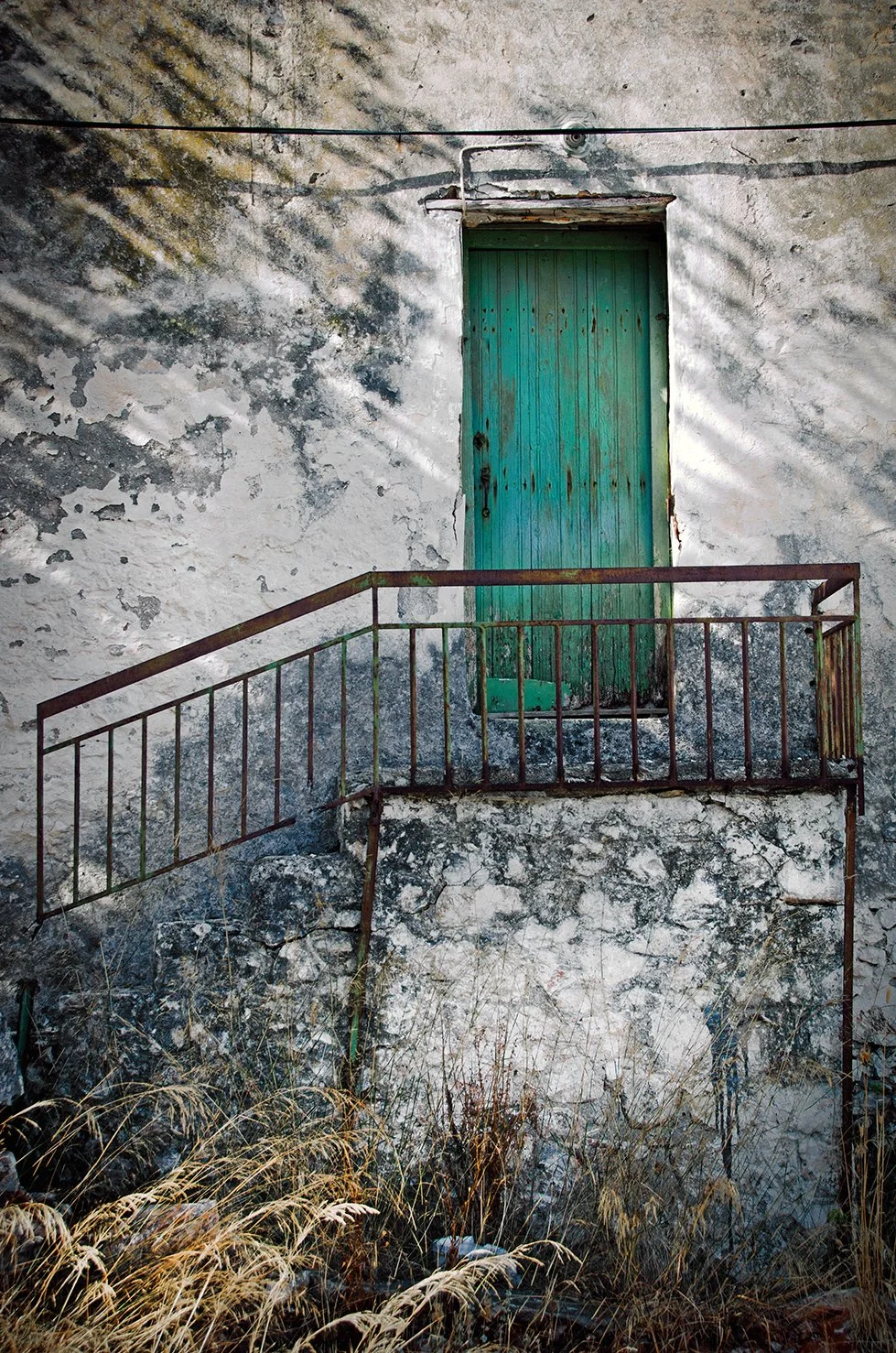
Within these structures, small details matter: a towel draped over a balcony rail, a chair pulled close to a window, a plant placed just inside the light.
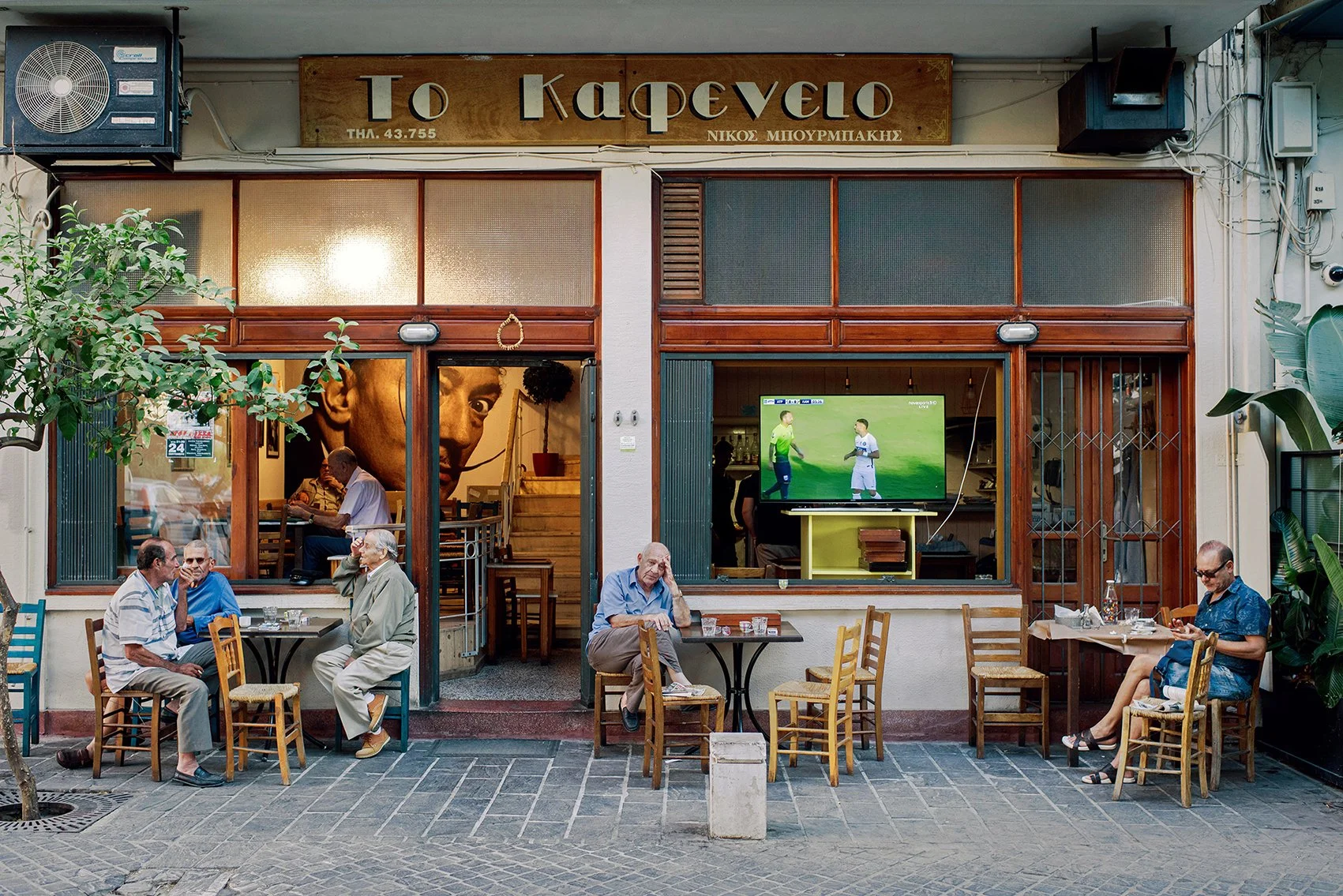
A kafeneio becomes a place of looking in both directions. Inside, the eyes of Salvador Dalí. Outside, people with their own stories, positioned not as subjects but as part of the scene’s underlying order. A television glowing inside while the street carries on outside.
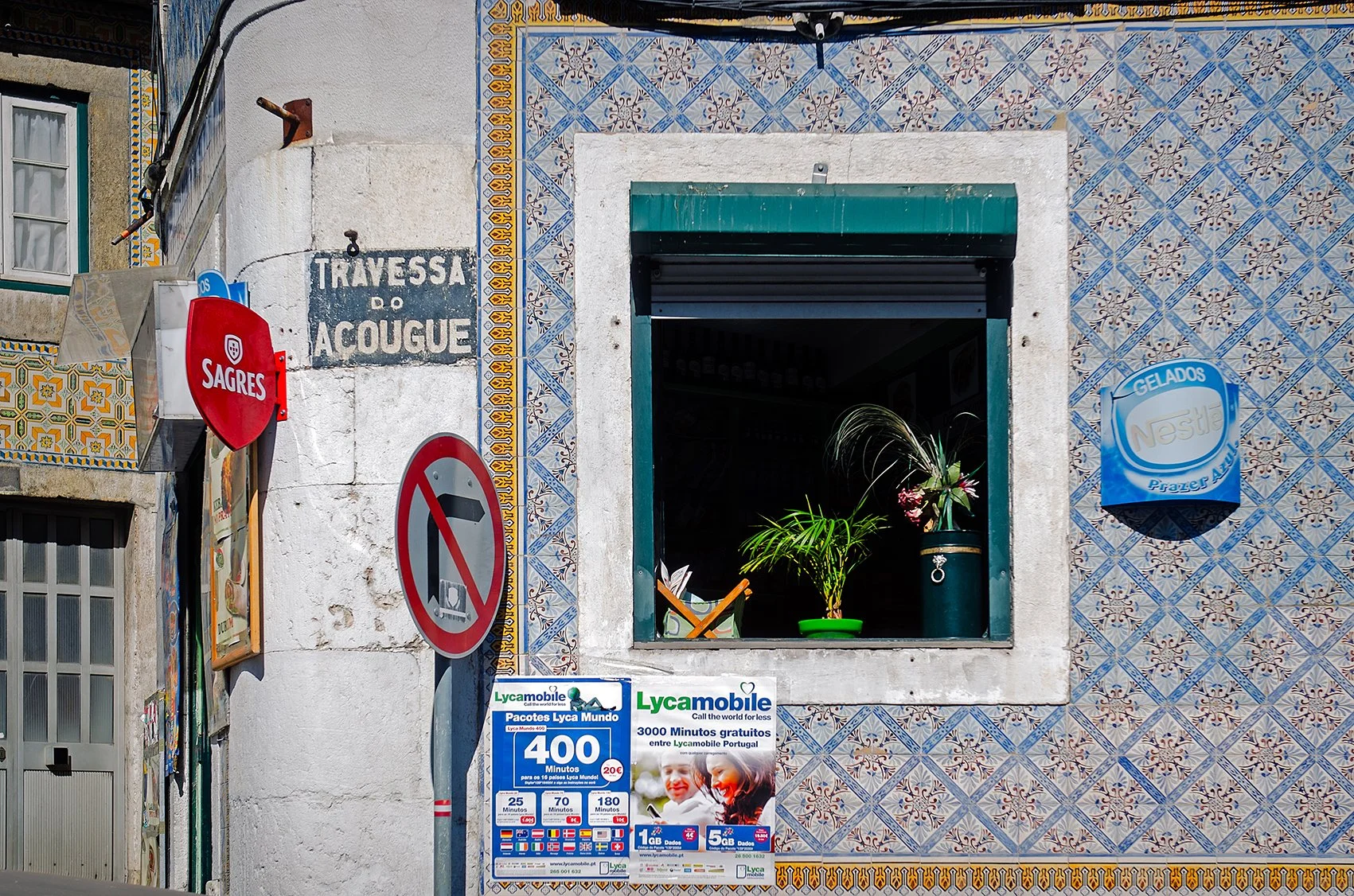
I’m drawn to photographing these spaces head-on. Not to dramatise them, but to let them be what they are, doors as surfaces, windows as divisions between inside and out, shopfronts as stages that don’t require performance. The camera becomes a way of noticing proportion, texture and balance rather than storytelling in the traditional sense.
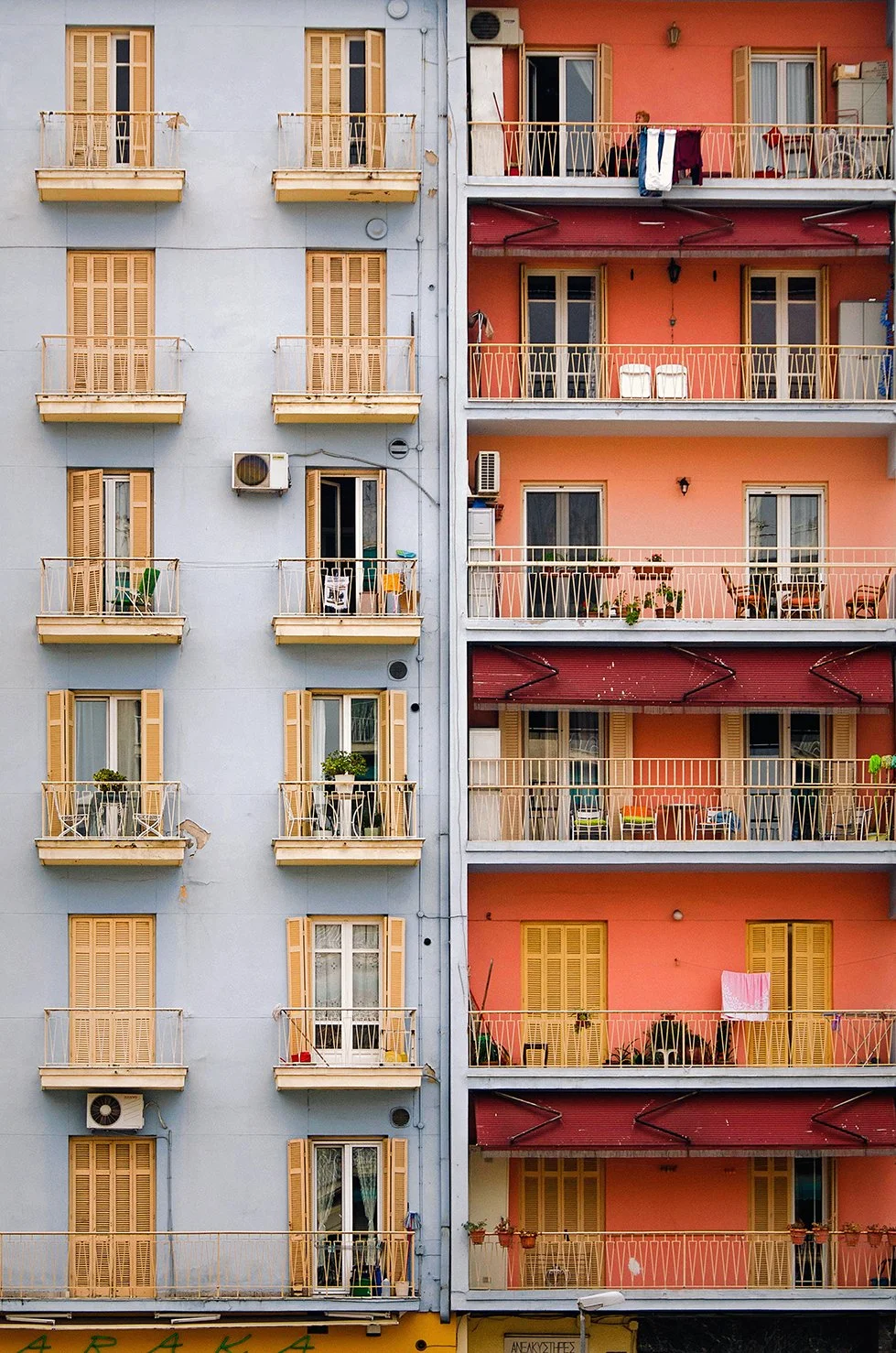
There’s also time in these scenes, in peeling paint, worn wood and patched walls. Not in a nostalgic way, but in the matter-of-fact accumulation of use. These places haven’t been preserved. They’ve just been lived with.
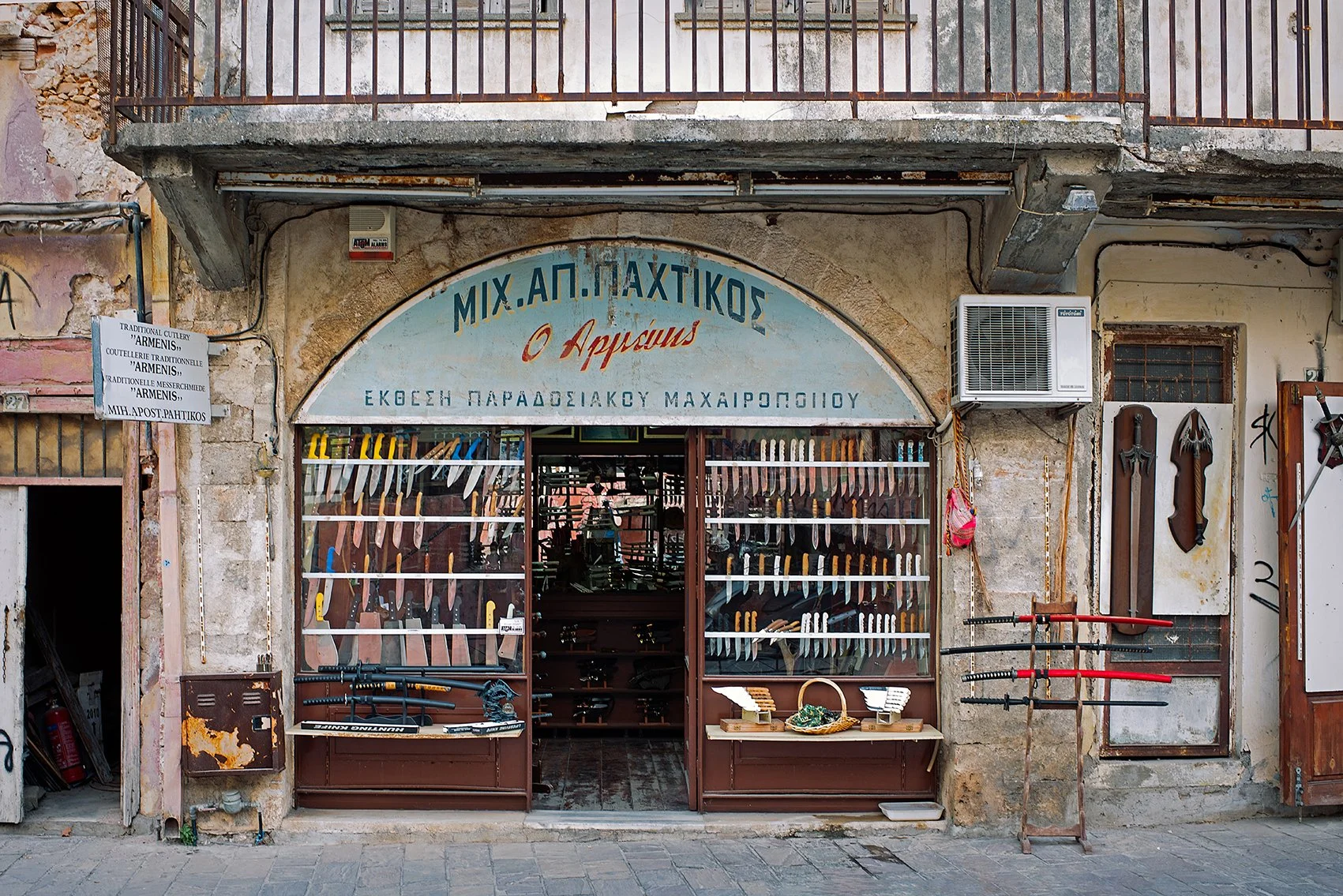
I don’t always know why I stop for one doorway or window and not another. Often it comes down to how things fall into place: the balance of shapes, the way surfaces meet, the small interruptions within a regular but imperfect pattern.